Kneading with paws, also known as ‘milk treading’, is a common behavior in cats. This behavior is not random, as it has a range of interesting causes. Curious about why cats knead, what you can do if it becomes uncomfortable, and how your cat communicates its feelings with other behaviors? Be sure to read on!
What exactly is cat kneading?
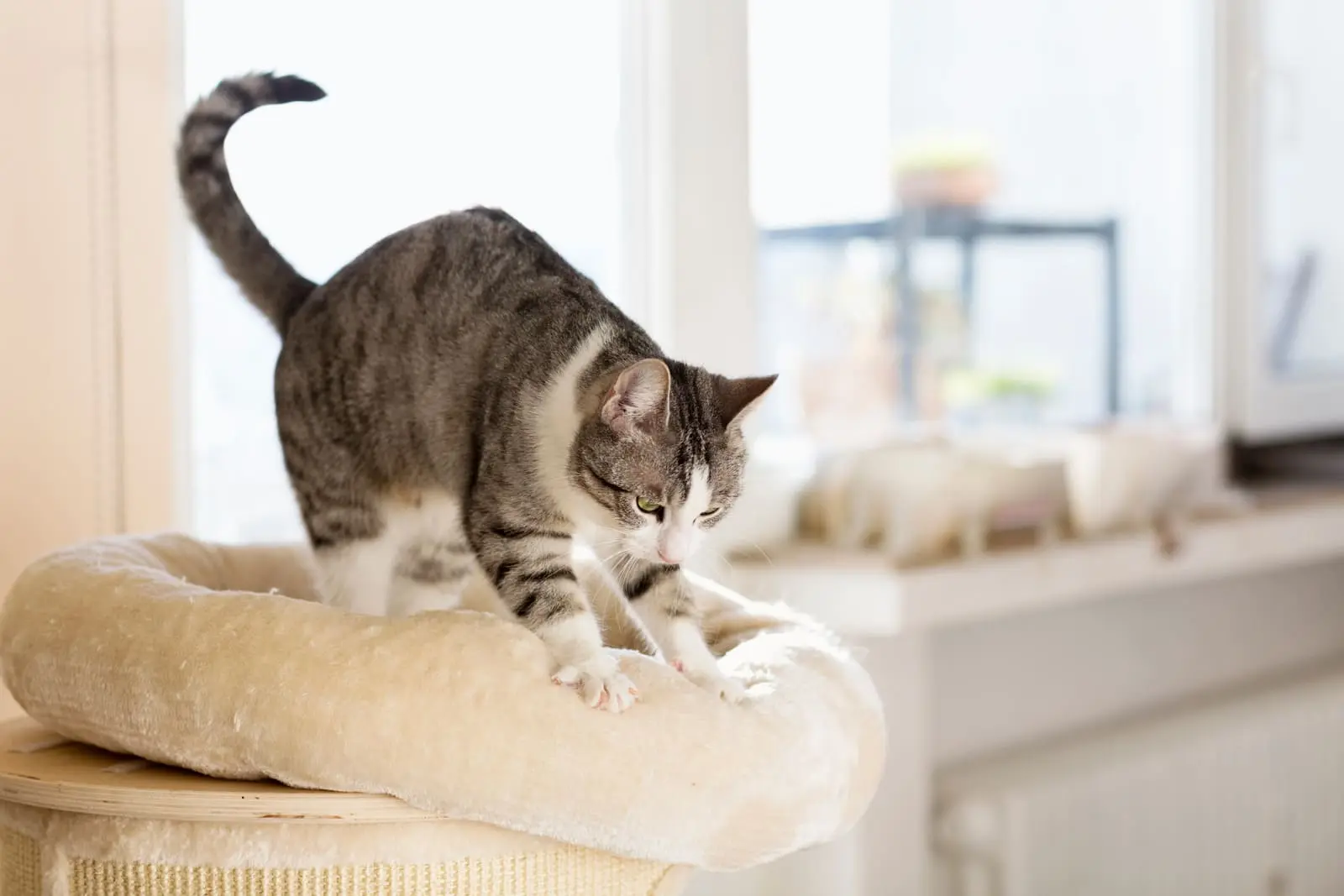
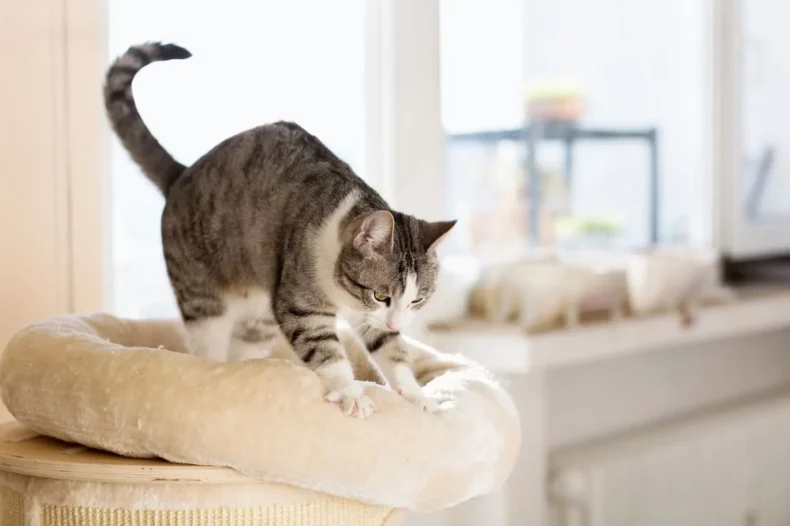
Cat kneading, also known as ‘milk treading’, is the rhythmic pushing of paws on a soft surface like a blanket, pillow, or sometimes even your lap. During kneading, cats often alternate their front paws in a treading motion. This behavior is sometimes accompanied by a contented purr and a relaxed expression.
Why do cats knead?
There are several reasons why cats knead. We list the most important ones for you:
- An instinct from the kitten phase: Kittens knead to stimulate their mother’s milk production. They often retain this instinct as they grow older.
- Marking territory: Cats have scent glands in their paw pads. How cool is that? By kneading, they leave their scent and claim their spot.
- Comfort and relaxation: Kneading helps cats reduce stress and feel at ease.
- Showing affection: If your cat approaches you while kneading, it can be a sign of love and affection, especially if accompanied by purring. Love is in the air…
- Preparing for sleep: Cats sometimes make a ‘nest’ by gently kneading before lying down. This behavior stems from their wild ancestors who flattened grass or leaves to create a sleeping spot. You didn’t know that, did you?
What if your cat’s kneading hurts you?
Your cat’s kneading with their sharp claws can be painful, especially if your cat is on your lap. Fortunately, you can reduce this discomfort.
You can regularly trim your cat’s nails to make them less sharp. You can also place a thick blanket or pillow between you and your cat so they can knead into that instead of directly on your legs.
Other ways your cat wants to communicate with you/ Other common cat behaviors
Besides kneading, your cat has other interesting ways to communicate with you. Here are some common behaviors you might have seen your cat do:
Purring
When your cat purrs, she is relaxed and feels comfortable around you. It’s a clear sign of contentment.
Headbutting
Headbutting is a typical way to show affection and rub her scent on you. When your cat headbutts you, she’s greeting you and showing that she likes you.
Grooming
Cats groom each other within social groups, so giving you licks is a sign of a strong bond. If your cat gives you licks, she’s showing you love.
Blinking
A slow blink from your cat means trust. She’s showing that she feels safe with you. If you blink back, you reinforce this message. Try it next time!
Raised tail
A raised tail means your cat is happy or greeting you. You often see this behavior when you come home or fill her food bowl. But watch out for a raised, puffed-up tail: this indicates fear or aggression!
With this knowledge, you can now communicate even better with your beloved cat. Let that bond grow!
Heb je nog een vraag?
Vraag gratis raad aan onze
honden- en kattenexpert van Just Russel.
The teeth are one of the most important body parts of your dog. They use them to eat, play, and also to defend themselves. We humans can brush our teeth to keep them clean and strong. A dog cannot do this on its own, so it’s important that we regularly engage in dental care.
Why is dental care important for your dog?
Just like humans, dogs can also suffer from plaque and tartar. Plaque can lead to gum inflammation. This is not only painful for the dog, but it can also bleed and cause damage to the teeth and their roots. In the worst case, the bacteria from the inflamed gums can enter the dog’s bloodstream. This can cause problems in the rest of the body, such as in the heart.
Brushing your dog’s teeth
The way to keep your dog’s teeth clean is by brushing them. You can buy special dog toothbrushes that allow you to easily reach all the teeth, and there is also special toothpaste for dogs. Never use toothpaste for humans!
Brushing teeth is not very fun for your dog at first, so it’s wise to teach it early on. If your dog is still a puppy, you can quite easily teach your dog through play or clicker training that brushing teeth is not a bad thing.
How do I brush my dog’s teeth?
Do you want your dog to let you brush its teeth without fuss or stress? Then it’s a good idea to get him used to the rubber toothbrush, the toothpaste, and the feeling of brushing at a young age. This goes in steps:
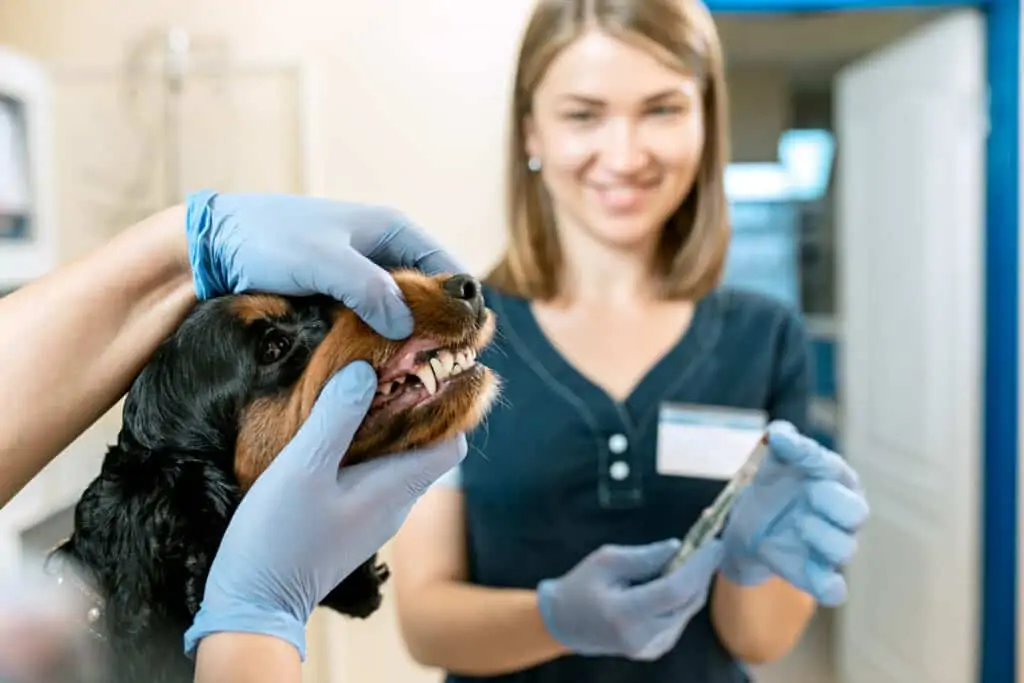
- Have your dog sit next to you and gently lift his lip while holding his head. Reward with a healthy snack if that goes well.
- If your dog accepts this smoothly, carefully open his mouth. Remember your reward! Is your dog not cooperating fully yet? Try again the next day.
- Once you have control over the head and teeth, bring out the toothbrush. Don’t start brushing immediately, but hold it close to the teeth or gently place the toothbrush against them. Reward your dog again! Then do the same with a little bit of toothpaste.
- Once your dog allows the previous steps, you can gently brush – and reward. Mission accomplished!
Useful tools
Not all dogs allow their teeth to be brushed. If this is the case with your dog, it’s best to look for alternative ways to maintain your dog’s oral hygiene. Fortunately, there are plenty of alternatives on the market!
- Chew bone
A chew bone can provide an alternative to brushing the teeth if necessary. It’s even better to see this as a supplement to brushing!
- Chew snacks
There are many chew snacks on the market that are good for your four-legged friend’s oral hygiene! Our personal favorite is the snacks from Garden Bites. With their unique texture and shape with knobs, they are ideal for oral hygiene! Believe us, dental care for your dog has never been so tasty and healthy!
- Barkbox
Barkbox offers many products that contain toothpaste. You should never use human toothpaste on your dog, but Barkbox products are completely safe!
Regularly check the teeth
Your dog can’t tell you when it has dirty teeth, so as an owner, it’s your job to keep an eye on this. Signs of bad teeth include a foul smell from the mouth and difficulty eating. Always have the teeth checked when you visit the vet. If it has gotten out of hand, there is a chance that your dog will need a dental treatment under anesthesia.
Want to learn more about dental care for dogs or dental sticks? Be sure to listen to our dog experts!
Heb je nog een vraag?
Vraag gratis raad aan onze
honden- en kattenexpert van Just Russel.
Exciting News: Cooper Pet Care joins the Just Russel Family
Cooper Pet Care has joined the Just Russel family. It marks a significant milestone for both companies, reinforcing Just Russel’s mission to enhance pet wellbeing through prevention.
Just Russel is set to expand its offerings with the addition of Cooper Pet Care’s veterinary and insurance expertise and digital services. Together, they are creating a more seamless, holistic experience for their customers – combining tailored pet food recommendations with direct access to expert veterinary advice online. This integration will offer pet parents a more convenient, trusted, and personalized approach to caring for their beloved pets.
Renowned for its expertise in personalized pet food, Just Russel will now be able to offer an even more robust suite of services to its customers. Cooper Pet Care’s services are poised to seamlessly integrate with Just Russel’s existing offerings, creating a more convenient and accessible experience for customers. Pet parents can anticipate enjoying the benefits of personalized pet food recommendations alongside easy access to expert veterinary advice.
This is a testament to both companies’ shared vision of delivering the highest quality care for pets. Cooper Pet Care is thrilled to embark on this new chapter as part of the Just Russel family and looks forward to serving the needs of pet owners across Europe.
#petcare #pethealth #innovation #Europe #EU #JustRussel #CooperPetCare
PS: Please note: Cooper Petcare’s online consultation sessions do not replace an in-person visit to the vet. They do not provide diagnoses or prescriptions.
Heb je nog een vraag?
Vraag gratis raad aan onze
honden- en kattenexpert van Just Russel.
Why your cat suddenly pees in the house and what you can do about it!
If an adult cat who has been using the litter box for years suddenly starts urinating outside of it, she might be (temporarily) not litter trained. She is certainly not doing it to be annoying. Read this blog to learn about the different causes and what you can do!
Is your cat urinating or spraying?
Spraying means a cat is marking her territory with urine or trying to communicate something to you (like not feeling well, for example). During spraying, the cat urinates against vertical surfaces while standing and with a quivering tail held up. The urine amounts are small and may appear greasier than normal urine. Moreover, the odor is stronger. Both female and male cats can spray, but non-neutered males are more likely to do so than neutered ones.
Why is my cat spraying in the house?
When a cat sprays, the cause is a behavioral problem. Spraying is a form of communication through which your cat tries to convey a message. This message can be directed towards other cats, herself, or even to us. In non-neutered cats, the message is often clear: “I am fertile.” Neutered cats are more likely to feel unwell or experience stress. Unlike neutered cats, it is normal for non-neutered cats to spray indoors. Neutered cats may also spray occasionally, usually in the garden, to exchange information with other neighborhood cats. If a neutered cat sprays indoors, it’s best to consult a veterinarian or behavior specialist.
Why is my cat urinating in the house?
There can be several reasons why your cat is urinating indoors, despite being litter trained. Usually, psychological or medical problems are the underlying causes:
1. Psychological causes
-
A new cat in the household
When a new cat joins the family, the existing cat may resist the change. Multiple cats may not get along well, especially when they have to share a litter box. The result: your cat urinates in the house as a protest!
-
Changes in the environment
Changes in your cat’s territory can also cause her to urinate indoors. This could include moving to a new home, introducing a new family member (e.g., a baby), or even a new cat in the neighborhood.
-
A traumatic experience
Your cat may associate her litter box with a traumatic event. For example, she might have been scared, attacked, or experienced pain. Providing a new litter box in a different location in the house can solve this problem.
-
Owner’s scent
If your cat urinates on the bed or in the laundry basket, it may indicate that she feels anxious and only feels safe enough to relieve herself where your scent is present. Things that smell like the owner provide a sense of security.
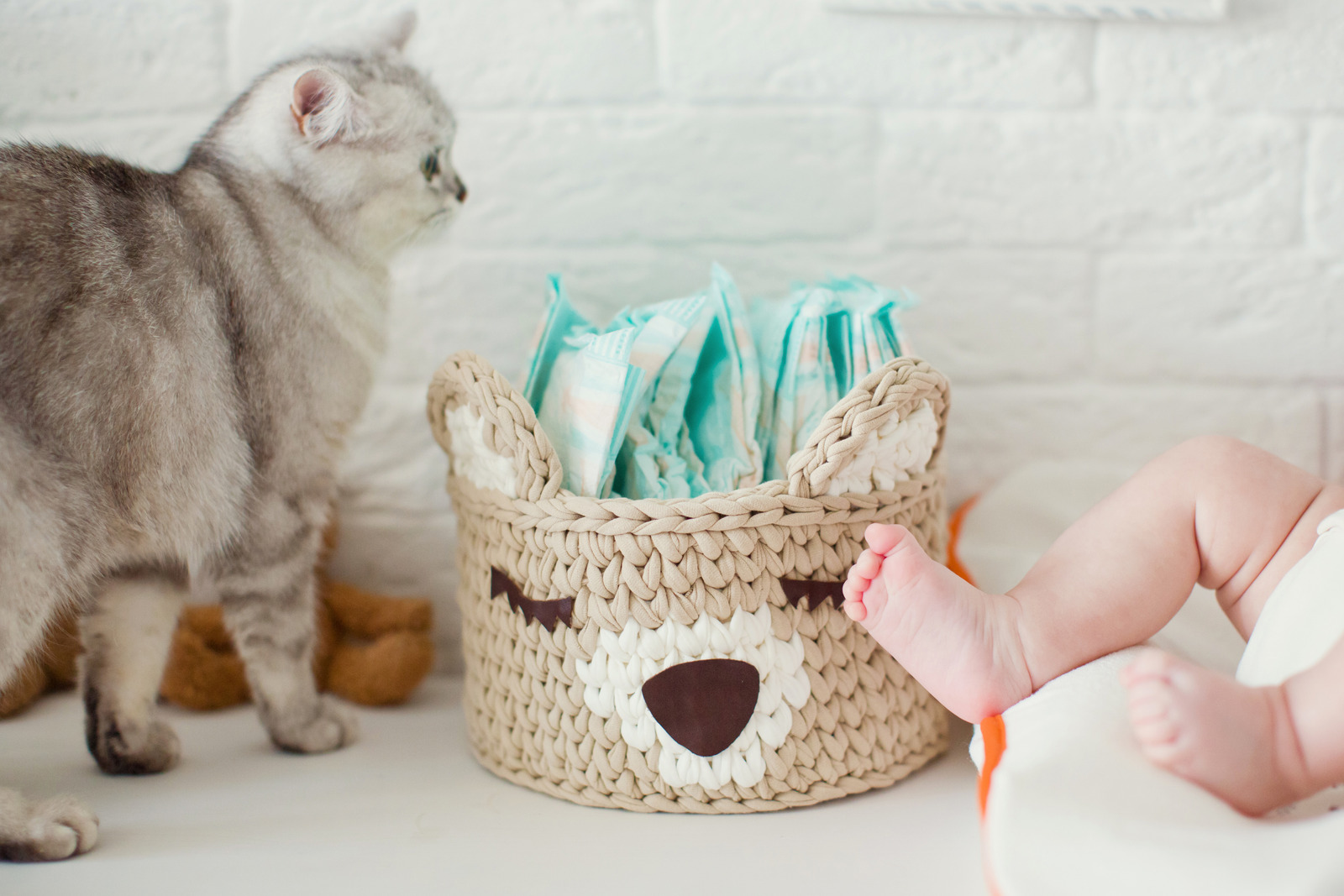
Hooray! A baby. But cats can suddenly urinate in the house due to this change in their territory.
2. Medical problems
-
Bladder infection or bladder stones
A bladder infection usually arises from stress. As a result, your cat may need to urinate more frequently and have difficulty holding her urine. Urinating becomes painful, and your cat develops a negative association with her litter box, causing her to avoid using it. There are painkillers and anti-inflammatory medications for bladder infections or special diets for bladder stones, but it’s best to consult a veterinarian for advice!
-
Kidney failure, thyroid, liver failure, or diabetes
Kidney failure, thyroid problems, liver issues, or diabetes can encourage increased drinking, leading to more frequent urination and reduced bladder control. For these conditions, it’s essential to visit the veterinarian for an examination of your beloved cat.
Important: Don’t underestimate the value of a healthy diet for healthy urinary tracts and maintaining a healthy weight. Tailored cat food may be the solution if your cat is suddenly urinating indoors.
What can you do if your cat is urinating indoors? 7 tips!
1. Do not punish your cat
Have you ever heard that you should push her nose into her urine when she urinates outside the litter box? We strongly advise against doing that because it will create extra stress and exacerbate the problem. Cats are clean animals, so there is a valid reason for their inappropriate urination. Punishment is ineffective.
2. Restrict access to certain areas of your home
By doing so, you limit the places that can serve as a toilet. If there has been urination in the house, clean that spot with products that emit a strong odor and simultaneously eliminate strong odors. For example: Urine Off.
3. Relocate the litter box
If your cat consistently urinates in the same place but not in the litter box, try placing the litter box in that spot.
4. Give your cat enough attention
Is there a new family member in the house? Make sure to give the existing cat some extra attention. Multiple cats in the household? The rule is: one litter box per cat.
5. Provide a calm and safe feeling
Cats also
prefer to relieve themselves in a calm and safe place. Therefore, avoid placing litter boxes next to a washing machine, staircase, or dishwasher. A window where other cats can look inside can also be scary. If the litter box is placed near the food or water… Do you like eating on the toilet?
6. Keep the litter box clean
A clean cat prefers a clean toilet. So, scoop the litter box daily and provide well-absorbing, odorless cat litter with a fine texture. In nature, felines seek sand-like substances to relieve themselves.
7. Ensure enough space
It may be the smallest room in the house, but preferably not too small. Research shows that cats prefer an open litter box. In a closed box, unpleasant odors may linger, making the litter box unattractive. Also, remember that the litter box should be one and a half times larger than your cat.
If you have a kitten at home that is still learning the ropes of litter training, we are here to help! Check out the blog How do I make my kitten litter trained to discover the best tips.

Heb je nog een vraag?
Vraag gratis raad aan onze
honden- en kattenexpert van Just Russel.
When does a dog have a fever?
How should you raise a puppy?
Tips on vaccinating and worming your puppy!
Cat language: what does my cat want to say?
Exciting News: Cooper Pet Care joins the Just Russel Family
Cat language: what does my cat want to say?
Everyone wonders at times: “What does my cat want to say?” We humans can talk to each other, but our pets can communicate with us much more challenging. So, we need to find another way to understand them. Are you curious about cat language and do you want to better understand your cat? Read on!
What is cat language?
Cats communicate differently from us. You can distinguish cat language into verbal and non-verbal language. Cats use much more body language (non-verbal) and less sound (verbal). Moreover, each cat has its own style of communication. If you want to learn more about your cat’s body language, then this blog is the right place for you!
How can you talk to your cat?
You can simply talk to your cat if you want to communicate with your beloved pet. Cats have difficulty understanding commands but learn to recognize your tone. Use a higher pitch to convey friendliness and a lower pitch for anger or displeasure.
If you frequently repeat specific words to your cat, your cat will begin to understand them. For example, if you often say “bed” before going to sleep, your cat will recognize this and follow you to the bedroom.
How to say “I love you” in cat language?
We can also use non-verbal communication or body language to communicate with our cat. Want to smile at your cat? Do it with your eyes instead of your mouth. Blinking at your cat indicates that you like him. Maybe you’ll get a blink back!
These are the different types of cat language to better understand your cat!
Do you want to better understand your cat? Below, we provide a brief list of emotions that you can easily observe in a cat. Discover them quickly!
Cat language when your cat is relaxed
You can calmly blink at your cat to convey a positive feeling, but did you know that you are actually imitating cat language? Cats regularly blink their eyes to show other cats that they are relaxed. It means: “I feel at ease.” If another cat feels the same way, they will do it back.
Purring might be seen as the most pleasant and well-known sound a cat makes. It indicates that your cat is content and relaxed. However, purring is not the only reason why cats purr. They also purr when they are, for example, ill or in pain to comfort themselves.
You can also tell from the ears when your cat is relaxed. If your cat has erect ears and is lying comfortably somewhere, it is also a sign that your cat is relaxed.
You can also tell when your cat is relaxed from the position of the whiskers. They will be relaxed and pointing forward.
Cat language when your cat is playful
When your cat is playful, you can deduce this from his body language, specifically his tail. A playful cat will swish its tail back and forth.
The ears of your cat will be up, slightly forward, and pointed.
If your cat has retracted claws while playing, everything is okay! If you can see the claws, be careful. Your cat might become aggressive.
Cat language when your cat is scared, tense, or stressed
If your cat tucks its tail between its legs, it means your cat is scared. It shows that your cat is insecure and submissive.
Another sign that your cat feels scared, tense, or stressed is when it flattens its ears. If the ears are flat, your cat is afraid and ready to attack.
The
eyes of your cat also reveal a lot in this situation. Your cat will be very alert and watchful. The eyes are wide open, and the pupils are clearly dilated.
The whiskers are directed forward. Your cat might also arch its back slightly and raise it in the air.
Cat language when your cat is irritated
If your cat moves its tail from one side to the other, she is probably irritated. However, it could also be play behavior. In this case, it is important to look at the situation to determine which of the two options it is. The faster the tail swishes, the higher the tension. Be careful that the tension doesn’t escalate into a potential attack!
Another signal to pay attention to is the position of the ears. The ears of an irritated cat are not much different from the ears of a fearful cat in cat language. They are turned backward or lie flat on your cat’s head.
Cat language when your cat is angry
If your cat is angry, you will definitely notice it. The fur on your cat’s shoulders and back will stand up. This indicates that your cat is fearful or aggressive. The body will be slightly bent forward, and the paws will be braced.
The tail will be swishing forcefully, straight up, or straight backward. If the ears are up but seem directed backward, that is also a sign of anger. An angry cat will also make noise. Angry cats may hiss or growl and bare their teeth. Your cat might also ‘yell’, showing a mix of anger and fear.
Heb je nog een vraag?
Vraag gratis raad aan onze
honden- en kattenexpert van Just Russel.
Why your cat suddenly pees in the house and what you can do about it!
Why do cats knead with their paws ?
What vegetables can a dog eat? A healthy top 10!
Tips on vaccinating and worming your puppy!
When is my dog mature?
How much should a puppy exercise?
Does your cat have skin problems? Causes, symptoms and treatments
Is your cat suffering from itching and do you see bald patches in her coat? Skin problems in cats are common, regardless of their age. Fortunately, the solution is often simple. In most cases, treatment, medication, or changes in diet and lifestyle can help. In this blog, we list the most common causes and what you can do about them!
What are the symptoms of skin problems in cats?
A cat with skin problems will have a dull, thin, and flaky coat. Additionally, there are other symptoms of skin problems in cats. These are the most common symptoms of skin problems in cats:
- Excessive licking and grooming
- Crusts on the back
- Bald patches
- Wounds
- Scratching and biting
- Itching
- Bumps
- Swollen, inflamed skin
- Ear problems (scratching and shaking)
What causes skin disease in my cat?
The most common causes of poor skin or coat condition in your cat are: atopy, fleas, nutrition, contact allergies, autoimmune diseases, fungal infections, and stress:
1. Atopy
The most common type of allergy in cats is atopy. Just like people, a cat can be allergic to grass or tree pollens. Depending on the type, there is usually seasonal itching. House dust mites and environmental mites can also cause atopy in cats. Other animal species such as canaries, cats, dogs, or rabbits can also be a cause.
How to recognize? Atopy is characterized by itching all over the body. Often, miliaire dermatitis occurs, and you can find crusts on the back.
2. Flea Allergy
When a cat is bitten by a flea, the saliva in the skin causes itching. This applies to every cat, but for an animal with a flea allergy, the symptoms and itching are more severe.
How to recognize? Red spots and crusts develop on the lower back. The itching can spread all over the body, mainly the belly and groin.
3. Food Allergy
In a food allergy, a cat is hypersensitive to an ingredient in the diet. It is usually an allergy to a protein source, which does not mean that a cat is allergic to proteins. A cat can be allergic to a specific protein source, for example, beef proteins, chicken proteins, pork proteins, or other animal species.
How to recognize? Cats with food allergies often have itching all over the body or locally. Additionally, a greasy and less fresh-smelling coat is not abnormal. Skin infections or stomach and intestinal problems can also occur. The treatment for a food allergy is hypoallergenic food. Supportive therapies such as shampoos or fish oils can help with this.
Just like people with a nut allergy, one nut can have serious consequences in case of a food allergy. The quantity ingested does not matter in the case of a food allergy. Even once a week, a snack containing an ingredient to which the dog or cat is allergic can cause serious issues.
4. Contact Allergy
With contact allergy, your cat’s immune system reacts hypersensitive to substances in the environment after contact with the skin. Your cat may develop rashes and itching after contact with perfume, soap, grass, cleaning agents, plastic, or pesticides.
5. Stress
Just as we bite our nails when we are nervous, a cat with stress may excessively groom herself. Have you recently moved, do you have frequent unfamiliar visitors, or do you have new housemates such as a child, dog, or other cat? All these factors can quickly upset cats, resulting in nervousness and skin problems. Stress grooming in cats is mainly characterized by licking the belly and symmetrically licking the flanks and/or hind legs.

6. Autoimmune Diseases
In an autoimmune condition, the cat’s immune system attacks cells, proteins, or other structures. This disrupts the immune system, and it functions less effectively.
7. Fungal Infections
A cat can also develop skin problems due to a fungus, also known as ringworm.
How to recognize? Does your cat have bald, flaky spots? Unlike the previously mentioned skin conditions, a fungal infection does not cause itching.
What can I do if my cat has a skin condition?
Go to your veterinarian. They will thoroughly examine your cat’s skin, ears, and nails. They will also delve into your cat’s medical history. Your vet will ask questions about other animals in your home and your little pet’s diet to determine the right treatment and prevent further infections or chronic problems.
Why is nutrition important for cats with poor skin?
Healthy cat food prevents skin problems and keeps your cat’s coat full and shiny. It also prevents your cat from developing food allergies and
ensures she has sufficient resistance against pests such as fleas, ticks, or mites. Finding the best food for your cat challenging? We are happy to help you further!
Heb je nog een vraag?
Vraag gratis raad aan onze
honden- en kattenexpert van Just Russel.
Tips on vaccinating and worming your puppy!
5 essential tips for a happy dog
How do you keep your dog’s teeth healthy ?
Why do cats knead with their paws ?
When is my dog mature?
Why does a cat purr?
Everyone with a cat asks the same question at least once: why does my cat purr? Many people think that cats only purr when they are happy. That is not wrong, but there are many more reasons for this purring. In this blog, we list them for you. Keep scrolling and discover how your cat really feels.
What is purring in cats?
Purring is the rumbling sound you sometimes hear from cats. When they inhale or exhale, you hear a ‘prrrr’ sound. That sound can be different for each cat. Some cats purr very loudly, while others do it silently. If you place your hands on the cat’s belly, you can also feel the vibration. So, purring is a part of cat language. You can read more about cat language in our blog about cat language.
Why does my cat purr?
A cat can purr for various reasons. Many people think a cat purrs when she is happy. However, that is not the only reason. There are many other causes for a cat’s purring. Keep reading to discover what else purring can mean.
Your cat purrs out of contentment
Many people already know this reason. A cat purrs when she is content and feeling good. This can happen while eating, cuddling, or playing. So, it is a sign that your cat is content.
Your cat purrs due to pain/discomfort
Not only contentment but also pain can be a reason for your cat’s purring. Some cats start purring when they are visibly not feeling well. So, be attentive and don’t be misled by the loud purring.
Your cat has been purring since kittenhood
Purring is one of the first things a cat does after birth. That, combined with kneading their paws. Kittens do this with their mother to show that they are content and safe. It also helps the mother lead blind and deaf kittens to the nipple. In response, the kittens purr back to stimulate milk production.
Your cat purrs to communicate
Cats also purr to communicate with us. They will purr louder and more intensely when they are hungry or want to be petted more. This is also known as the ‘requesting purr.’ This purring has evolved specifically to interact with humans. People have an instinct to respond immediately to this purring.
Your cat purrs to comfort itself
A cat will also start purring in its vulnerable phases: at the vet, when they are in pain, when they are just born, when they are a bit older or feral. Purring’s vibration can comfort them, suppressing their fear and stress.
Your cat purrs to strengthen bones
It is said that the frequencies of purring are self-healing. Cats would use purring to strengthen or heal their bones after a fall. That’s why cats have such a high chance of survival.
…
Heb je nog een vraag?
Vraag gratis raad aan onze
honden- en kattenexpert van Just Russel.
When is my dog mature?
How do I choose the right hypoallergenic dog food?
What vegetables can a dog eat? A healthy top 10!
Does your cat have skin problems? Causes, symptoms and treatments
Cat language: what does my cat want to say?
When does a dog have a fever?
Here’s the translation of the text:
Just like humans, dogs can sometimes experience fever. Your dog can feel very bad and unhappy because of it, which breaks your heart. It is difficult to assess what to do best when you think your dog has a fever. But fortunately, we have some advice. So keep reading and find out what fever is, what the symptoms and causes are, and how to handle it best.
What is fever in dogs?
We speak of fever when your dog’s body temperature rises due to illness. While playing, your four-legged friend can sometimes become overheated, but don’t worry, in that case, he does not have a fever.
What is a normal body temperature for a dog?
The normal body temperature of a dog is between 37 and 39°C, which is higher than that of humans. The temperature of puppies is slightly higher, around 39.5°C.
When does a dog have a fever?
A dog has a fever when its body temperature is higher than 39.5°C. Between 39°C and 39.5°C, we speak of an elevated temperature. Your pet may feel quite miserable at this point, and we recommend visiting the veterinarian.
Why does a dog have a fever?
The main causes of fever in your dog are:
- A viral infection: can be caused by, for example, intestinal viruses, liver problems, or an infection somewhere in the body
- A parasitic infection: think of diseases like Leptospirosis, Leishmania, and Giardia
- A bacterial infection: often occurs in the lungs, skin, or intestines
Do you want to be well informed about the most common dog diseases? Be sure to read this blog.
What are the symptoms of fever in a dog?
The main symptoms of fever are:
- Panting without having run or played
- Shivering
- Eating less or not at all
- Warm ears or a warm, dry nose
- Diarrhea
- Lethargy, sluggishness
- Red eyes
How can I measure fever in my dog?
To determine if your dog has a fever, it is best to apply some vaseline to the thermometer first. Then gently insert it about 1 to 2 centimeters into the anus and wait for the result. For measuring your dog’s fever, you can use any thermometer.
Can I measure fever in a dog without a thermometer?
If you don’t have a thermometer, you can measure your dog’s temperature by feeling his ears or paws with your cheek or the back of your hand. If they are much warmer than your skin, there is probably something wrong. Checking your beloved pet’s nose can also help you further. A cold and wet nose usually means everything is okay with your dog. But a warm and dry nose likely indicates that he probably has a fever.
What treatment should a dog with a fever receive?
If your dog’s body temperature does not decrease, the veterinarian will prescribe fever-reducing medication. The vet may also recommend medication against a specific pathogen. Your dog’s recovery may take a few days, but sometimes it can take weeks or months. So don’t worry too quickly if the healing process is not lightning fast.
What can I do to reduce fever?
You can try to lower your dog’s fever by cooling his paws and ears with a lukewarm soaked cloth. Also, make sure your furry friend continues to drink to prevent dehydration. If the fever does not go down
, contact the veterinarian.
Heb je nog een vraag?
Vraag gratis raad aan onze
honden- en kattenexpert van Just Russel.
Cat language: what does my cat want to say?
How much should a puppy exercise?
Why does a cat purr?
5 essential tips for a happy dog
What vegetables can a dog eat? A healthy top 10!
Exciting News: Cooper Pet Care joins the Just Russel Family
How do I choose the right hypoallergenic dog food?
Does your dog also suffer from food allergies, but you don’t know which hypoallergenic food is most suitable for your dog? Fortunately, there are several ways to deal with these food allergies. In most cases, hypoallergenic dog kibble is the best solution. In this blog, we explain which hypoallergenic kibble is suitable for your dog and which ingredients it does or does not contain. Keep reading to discover everything you need to consider to help your dog with his skin, coat, and digestive issues.
What is hypoallergenic dog food?
Hypoallergenic dog food is specially formulated for dogs that are sensitive to certain nutrients. The purpose of this food is to reduce allergic reactions in dogs that are sensitive to them.
Why can hypoallergenic dog food be beneficial for dogs with allergies?
Hypoallergenic dog food can help reduce symptoms such as itching, red skin, loose stool, or similar issues. These symptoms could indicate a food allergy. A hypoallergenic diet that contains only one source of protein could significantly reduce or eliminate allergic reactions.
Tips for choosing hypoallergenic dog food
Below, we provide you with some tips to consider when choosing the suitable hypoallergenic kibble. This way, you can make the best choices to help your dog with his problems.
Consult advice from a veterinarian
First and foremost, it is advisable to contact your trusted veterinarian. They can conduct some tests to determine whether it is a food allergy or an environmental allergy. Afterward, they can further investigate specific food allergies.
Avoid ingredients that commonly cause allergic reactions, such as grains and some proteins
With a hypoallergenic diet, you can also eliminate ingredients such as chicken, beef, grains, and others from the food. These are common allergens. In many cases, these problems are already resolved by excluding these ingredients from the diet.
Choose hypoallergenic dog food with high-quality ingredients
If you want to give your dog hypoallergenic kibble, it’s essential that they are made from a single protein source. Salmon is an ingredient with very few known allergies and is, therefore, an excellent hypoallergenic kibble. The same applies to kibble with duck.
Check the label and packaging for important information
If there are already known allergies, it is essential to check the packaging. You can verify whether there are no ingredients that could cause an allergic reaction.
Choose a reliable brand
For hypoallergenic food, it’s best to look for a reliable brand. Below is the link where you can find all the necessary information about our hypoallergenic formulas and their benefits.
https://justrussel.com/hypoallergeen-hondenvoer/
Which ingredients should you, as a pet owner, avoid?
Below is a list of ingredients that commonly cause food allergies. As a pet owner with a sensitive dog, it’s best to avoid these.
Grains and gluten
Grains and gluten are common food allergies and are often less digestible. This can disrupt the digestive system, which may cause loose stool in your dog. If your dog already has sensitive intestines, it’s best to avoid grains and gluten in the food.
Beef, chicken, and other common protein sources
Animal protein sources like chicken and beef are well-known food allergens in dogs. These ingredients are often the cause of coat and digestive problems in your dog, so it’s best to keep them away from your dog.
Artificial colorings and flavorings
It’s also best to avoid artificial colorings and flavorings in your dog’s food. These can sometimes have negative effects on your dog’s health.
Preservatives and additives
It’s also not recommended to give kibble with various additives that keep the kibble fresh for as long as possible. These can also cause disruptions in the digestive system. Therefore, it’s always advisable to buy as natural and fresh as possible.
Dierenarts Joy has some tips for choosing the right food for your dog!
Want to know more about hypoallergenic dog food? Read one of these blogs!
Heb je nog een vraag?
Vraag gratis raad aan onze
honden- en kattenexpert van Just Russel.
How much should a puppy exercise?
When is my dog mature?
Why do cats knead with their paws ?
Why does a cat purr?
Cat language: what does my cat want to say?
Does your cat have skin problems? Causes, symptoms and treatments
5 essential tips for a happy dog
Do you see your dog as your own son or daughter? We can only agree with you! Dogs do resemble us and deserve as much attention and love. As pet owners, all we want is for our dog to be happy and wagging through life, right? But how do you make your dog happy? We will reveal 5 essential tips for a happy dog, scroll down for a happy dog!
5 essential tips for a happy dog
1. Get those paws moving!
From Chihuahua to Greyhound, movement is in the blood of every dog. They remain true to their hunting and herding instincts. Therefore, give your pup enough exercise daily. Treat him to at least two walks or play sessions per day, or let him run around in an open field or simply in your backyard. The more your dog moves, the fitter and, consequently, happier he will be. A wise man once said, “A healthy mind in a healthy body.”
2. Mental training for your dog
If you see your dog lounging in the sun for hours, it’s easy to forget that he can also get bored occasionally. To make and keep your dog happy, it’s essential to stimulate and challenge him mentally. Teach him to sit, lie down, fetch, or even walk between your legs. Other fun brain games for your dog are hide-and-seek and treasure hunting. Find out what motivates your dog, play along, and keep his brain fit and healthy!
3. Pay attention to your dog’s hygiene
Have you noticed how your pup regularly licks his paws, snout, nails…? He doesn’t do this for no reason; your dog is very particular about his hygiene and does everything to keep himself spick and span – and therefore happy. As owners, we also need to pay attention to the care of our dog because there are many things he cannot do for himself. To ensure your four-legged friend is happy, regularly brush his coat, check his skin for ticks and insect bites, give him a timely bath, make sure his nails don’t get too long, and ensure impeccable oral hygiene.
4. Let those happiness and cuddle hormones flow
The ultimate way to make your dog happy is to give him enough attention and love. First and foremost, make sure he lacks nothing at home: a comfortable dog bed, various types of toys to combat boredom, fresh water, and healthy, natural dog food. It’s important that he feels safe and comfortable there. Additionally, dogs love affection! Give him plenty of cuddles and strokes for a healthy dose of dopamine and oxytocin, better known as happiness and cuddle hormones. It’s the best tip for a happy dog, if you ask us!
5. Healthy and natural dog food
You may perfectly follow all the previous steps, but your dog will first be happy with tasty, healthy, and natural food. By providing him with all the necessary nutrients such as proteins, minerals, vitamins, and healthy fats daily, you keep him physically and mentally in top condition.
Just Russel’s healthy and personalized dog food contains only fresh and essential ingredients to ensure and support your four-legged friend’s well-being. The Just Russel app easily creates a customized food plan for your dog. Moreover, you can always rely on our veterinarians for free and extensive health advice about your dog. All this because your dog deserves a healthy and, above all, happy life!
Heb je nog een vraag?
Vraag gratis raad aan onze
honden- en kattenexpert van Just Russel.
When does a dog have a fever?
How much should a puppy exercise?
Does your cat have skin problems? Causes, symptoms and treatments
How do I choose the right hypoallergenic dog food?
How should you raise a puppy?